Doctors Plan Nationwide Strike on Nov 1 and 2
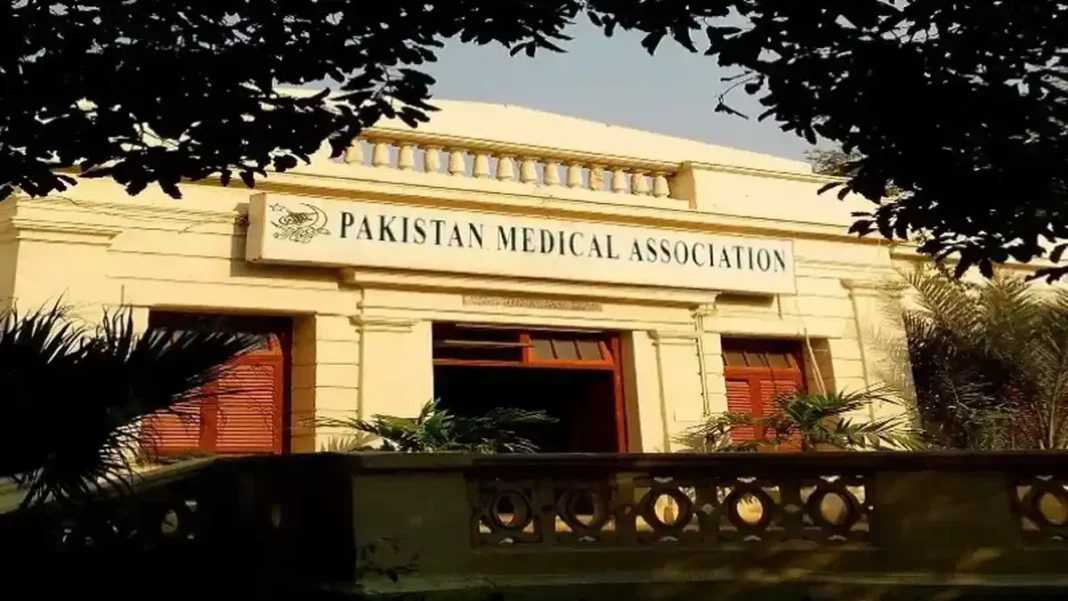
Senior doctors representing several professional medical bodies have warned of a two-day countrywide strike on November 1 and 2 if the government does not address their grievances. The warning came at a press conference in Karachi on Thursday, held at PMA House after a detailed discussion on the situation healthcare providers face.
The meeting decided that during the strike, all services except emergency care would remain suspended. That means outpatient clinics, scheduled consultations and routine procedures would stop, while emergency departments would keep working.
Representatives of the Pakistan Medical Association, the Young Doctors’ Association, the Private Hospital and Clinics Association of Pakistan and the Society of Obstetricians and Gynaecologists of Pakistan attended the meeting.
Two demands
The doctors raised two main demands. The first is an immediate end to Federal Board of Revenue raids on private clinics. The second is a halt to the registration of criminal cases against doctors in matters of alleged medical negligence.
Pakistan Medical Association Centre President Dr Izhar Ahmed Chaudhary described what he called a hostile environment for doctors. He said the country’s healthcare system stood on the brink of collapse, not because doctors lacked skill, dedication or empathy, but because those who save lives were being targeted, criminalised and humiliated.
“A doctor’s hands are meant to heal. A doctor’s mind must be focused on fighting disease and pulling human beings back from the jaws of death,” he said. “Yet today, in Pakistan, those same hands are being handcuffed, and those same minds are forced to live in constant fear of police raids, arbitrary arrest, and public violence.”
The tax dispute
The tax dispute centres on the Federal Board of Revenue’s drive to impose retail-style point of sale systems on private clinics and medical consultations. Dr Chaudhary said the move was fundamentally flawed and unethical.
“A doctor’s clinic is a place of healing, not a supermarket checkout counter. A medical consultation is a sacred human duty, not the sale of a commodity,” he said. He added that coercive raids on medical facilities, and treating respected physicians like tax evaders, created an environment of intimidation.
Pakistan Medical Association Centre Secretary General Dr Abdul Ghafoor Shoro said every burden forced onto a clinic ended up raising healthcare costs for citizens.
That argument connects the doctors’ protest to a wider public concern. Private clinics handle a large share of everyday care in Pakistan. If clinics close or raise fees, the burden falls on crowded public hospitals and on families who pay for treatment from their own pockets.
FIRs after deaths
The second grievance concerns police cases filed after patients die. Dr Shoro said tragic medical outcomes, often caused by a lack of basic medicines, delayed hospital arrivals or severe shortages in the system, were immediately met with police cases under Sections 302 and 322 of the Pakistan Penal Code against treating doctors.
“No physician entered an emergency room to lose a patient,” he said. “Every death weighs heavily on a doctor’s conscience. To brand a complication or a natural loss of life as murder is a monstrous injustice.”
He asked who would step in to save a dying patient if doctors were treated like criminals for taking on critical cases. The point, as the speakers framed it, is that doctors who fear a murder case may avoid high-risk patients altogether.
The speakers demanded that law enforcers immediately stop filing direct cases against medical professionals, and that no legal action proceed without prior evaluation by a certified, independent medical board. They also called on parliament to pass the Healthcare Professionals Protection Act without delay, and to provide security across all medical facilities.
What patients should expect
If the strike goes ahead on November 1 and 2, emergency services will continue, according to the decision taken at the meeting. Routine appointments, elective procedures and private clinic visits are the services at risk.
Patients with scheduled operations or follow-up visits on those dates should contact their hospitals in advance to confirm whether their appointment stands. Those who depend on private clinics for regular treatment may need to bring appointments forward or seek care at public facilities.
The future course of action will be decided at the Pakistan Medical Association Central Council meeting on November 28, the speakers announced. That leaves room for talks before the strike dates, and for a longer campaign if the government does not respond.