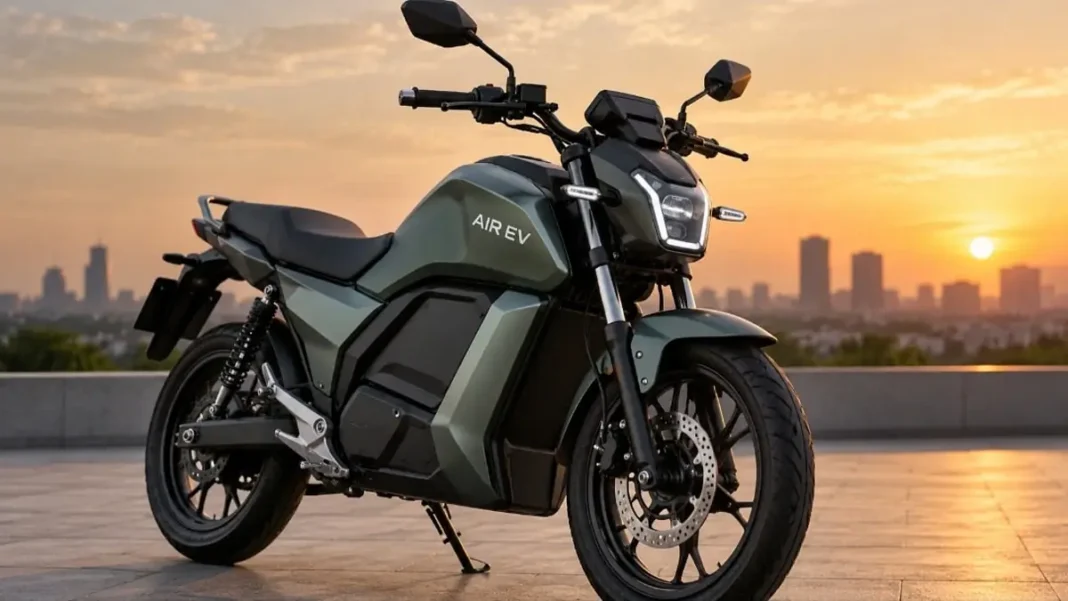
Air Link Communication Limited will launch its electric bike brand, Air EV, on November 4, 2026, with deliveries expected to begin about a week later. The Airlink Air EV launch marks Airlink’s move beyond its core mobile phone business into Pakistan’s electric mobility market. The company shared the plan during its annual general meeting, according to a report published by Arif Habib Limited on Tuesday, as reported by ProPakistani.
Airlink plans to source its electric bikes from international partners at first, choosing partners that offer competitive prices. Over time, the company will shift towards local assembly and manufacturing, with a target of up to 95 percent localisation.
What Airlink plans to sell
The first Air EV bikes will feature replaceable lithium-ion batteries. That detail matters for riders, since a replaceable battery can be swapped or charged separately, and it removes the need to wait beside a charging point.
Airlink will initially procure lithium-ion batteries locally as part of its localisation strategy. That step suggests the company wants to build a local supply chain early, rather than depending on imported batteries for long.
The company has not yet published prices, models, or range figures for the first Air EV bikes. Those details will matter far more to buyers than the launch date alone, and they are likely to appear closer to November 4.
Why a phone company is entering electric bikes
Airlink is best known in Pakistan as a mobile phone distributor and manufacturer. Its move into electric two-wheelers follows a wider trend, in which companies with distribution networks and assembly experience look for growth in new product lines.
Electric bikes suit that logic. They use batteries, electronics and assembly skills that overlap with consumer electronics, and they sell through dealer networks that Airlink already understands.
The timing also fits the market. Fuel costs remain high for petrol bike riders, and electric bikes promise lower running costs. For daily commuters in cities, that saving can be the main reason to switch, provided the purchase price and charging options make sense.
Airlink Air EV launch and local manufacturing
The most important part of Airlink’s plan may be its localisation target. Reaching up to 95 percent local manufacturing would cut import costs, reduce exposure to currency swings, and create jobs in assembly and parts supply.
Pakistan has been pushing local assembly in several sectors, from phones to vehicles. Italian motorcycle brands are also set to be assembled locally in Pakistan from January 2027, and a $2.25 billion lithium-ion battery plant is planned in the country.
Airlink’s plan sits inside that wider shift. If local battery supply grows, electric bike makers will have a stronger base. If it does not, they will still depend on imports for the most expensive part of the bike.
What happens next
The launch on November 4 will be the first test. Buyers will look at price, range, warranty, and service network before they commit.
Deliveries are expected about a week after launch, which means the first riders could be on the road in mid-November. Early feedback from those riders will shape demand, and it will show whether Airlink’s bikes suit Pakistani roads and daily use.
For now, the announcement is a statement of intent. Airlink has set a date, named its brand, and set a localisation goal. The product itself will have to prove the plan.
Frequently asked questions
When will Airlink launch Air EV?
Airlink will launch its Air EV electric bike brand on November 4, 2026, with deliveries expected about a week later.
What kind of batteries will Air EV bikes use?
The bikes will feature replaceable lithium-ion batteries, and Airlink plans to procure batteries locally at first.
How much local manufacturing is planned?
Airlink targets up to 95 percent localisation over time, starting with sourcing from international partners before shifting to local assembly.
Why is Airlink entering electric bikes?
The company is expanding beyond mobile phones into electric mobility, where lower running costs and local assembly offer growth.
Related coverage: $2.25bn Lithium Battery Plant Planned in Rawalpindi, Italian Motorcycles to Be Assembled in Pakistan From Jan 2027, CDWP Advances Rs213 Billion in Development Projects, Airblue Starts Islamabad, Lahore to Quetta Flights