Hormuz Tanker Fires Deepen Strait Crisis
At least four tankers caught fire after striking naval mines in or near the Strait of Hormuz, Iran’s armed forces said on Thursday. The Hormuz tanker fires came a day after the United States military said key shipping routes through the waterway had been cleared of mines, a claim Tehran now disputes in public.
Iran’s Islamic Revolutionary Guard Corps said three oil tankers exploded and caught fire over the preceding 24 hours after hitting mines while trying to cross what it called an unauthorised southern route through the strait. The vessels had switched off their navigation systems and ignored warnings from the Guard’s navy, the statement said. Iran did not name the ships, give their flags, or say when exactly each incident happened.
Later on Thursday, Iran’s army reported a fourth tanker on fire east of the strait. That vessel had struck mines while operating in what Tehran described as a restricted and dangerous area. The army said the tanker was damaged and unable to move. Iranian state television carried the statement.
Hormuz tanker fires: a second incident off Oman
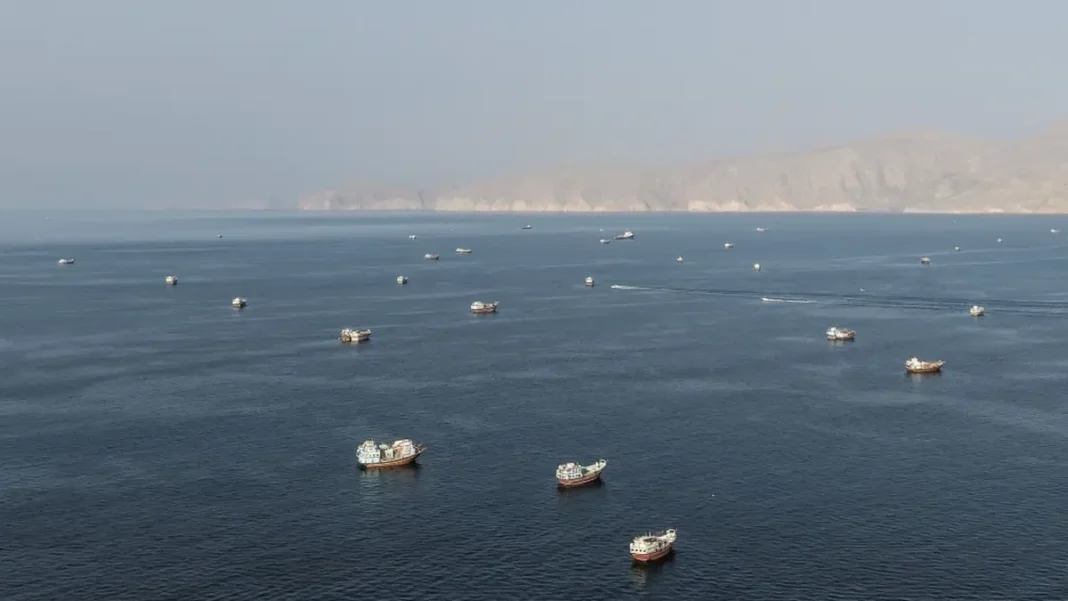
Separately, the United Kingdom Maritime Trade Operations agency reported a vessel on fire about 25 nautical miles north-east of Khasab, Oman, inside the strait. The agency had earlier reported two other incidents in the same area. A traditional dhow caught fire and sank nine nautical miles north of Khasab after a maritime security incident, and its crew was safely evacuated. A tanker was also struck by an unidentified projectile while transiting the strait, the agency said.
The reports do not yet form one confirmed picture. Iran’s account covers four tankers. The British agency’s reports cover a dhow, a vessel on fire off Khasab, and a tanker hit by a projectile. It is not yet clear how far those reports overlap, and no independent source has confirmed the names or flags of the tankers Iran described. Readers should treat the Iranian claim as a claim, not as a verified casualty or damage list, until ship names and independent confirmation appear.
The dispute over the sea lanes is now part of the story itself. United States Central Command had said mines in primary transit routes had been cleared. Guard spokesman Hossein Mohebi answered on social media, telling the American military to prove the claim with independent evidence rather than statements. Iran considers ships using the southern corridor near the Omani coast to be unauthorised, and it says that route remains mined. Washington has not, in the reporting so far, produced the independent evidence Tehran demanded.
Why the strait matters for Pakistan
The Strait of Hormuz is a narrow passage between Iran and Oman. It normally carries about one-fifth of global oil and gas consumption. When tankers stop, slow down, or take longer routes, fuel costs and shipping insurance tend to rise, and those costs reach fuel-importing countries. Pakistan buys much of its oil from Gulf suppliers, so a sustained disruption in the strait reaches Pakistan through prices and supply timing even when no Pakistani ship is involved. No Pakistani vessel has been named in Thursday’s reports.
This is also not an isolated week for the waterway. Feature Pakistan reported on October 12 that a third tanker had struck a mine in the strait, and on October 15 that two ships had sunk in the area, with one crew member killed. Thursday’s incidents extend that pattern from single strikes to a cluster of fires in one day, and they arrive alongside a direct clash between Iran and the United States over whether the lanes are safe at all.
Hormuz tanker fires: talks tied to conditions
Iran also linked progress in negotiations to its own conditions. Parliament Speaker Mohammad Baqer Qalibaf said on Thursday that Tehran’s seven conditions had been repeatedly and clearly communicated to mediators, and that progress could only follow if those demands were met. He said the carrot-and-stick approach had no effect on Iran. The statement gives no detail of the seven conditions in the reporting so far.