Pakistan seeks more Saudi investment in key sectors
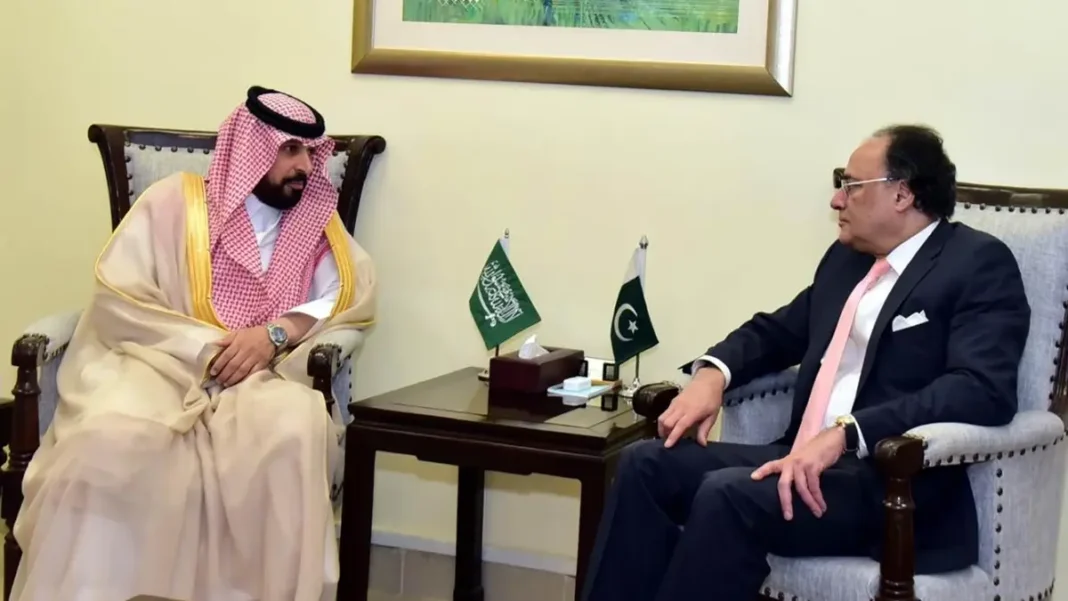
Pakistan has asked Saudi Arabia to expand investment in agriculture, minerals and mining. The request came during a meeting between Finance Minister Muhammad Aurangzeb and Saudi Ambassador Dr Rajeh Tami Albugamy at the Finance Division in Islamabad on Thursday.
The two sides discussed bilateral economic cooperation, trade and investment, along with shared priorities for the period ahead. Both stressed the need to turn shared priorities into tangible outcomes and to strengthen commercial engagement between the two countries.
The stabilisation pitch
Aurangzeb set out Pakistan’s case in terms of recent macroeconomic progress. He pointed to improvements in foreign exchange reserves and inflation, and to recent upgrades by international credit-rating agencies.
He also noted Pakistan’s return to international capital markets through a recent $3 billion Eurobond issue, as well as its access to China’s capital market. The message was plain: the stabilisation phase is done, and the next phase should be led by investment.
The finance minister said Pakistan aimed to build on these gains to strengthen investor confidence and support sustainable, investment-led growth. He reaffirmed the government’s commitment to structural reforms and to a stable, predictable investment environment for domestic and foreign investors alike.
Why these three sectors
Agriculture, minerals and mining are not a random list. They are the sectors where Pakistan believes it has natural scale and where Gulf capital has shown interest before.
Agriculture offers food security partnerships, an area of direct interest to Gulf states. Minerals and mining cover the copper, gold and rare-earth potential that Islamabad has been trying to develop through structured, large-scale projects rather than small, scattered licences.
For Saudi investors, the attraction is a mix of returns and supply security. For Pakistan, the attraction is investment that creates jobs and export earnings rather than loans that add to debt. That distinction sits at the heart of the government’s investment-led growth argument.
The relationship behind the request
The Saudi ambassador pointed to the longstanding relationship between the two countries, rooted in shared faith, history, mutual trust and respect. He said stronger business-to-business engagement could deepen people-to-people ties and create mutually beneficial economic opportunities.
That business-to-business point matters. Government-to-government agreements open doors, but it is private firms that sign contracts, build plants and hire workers. The ambassador’s emphasis suggests Riyadh wants commercial partnerships, not just official statements.
Regional stability and trade routes
The meeting also covered the prevailing regional situation and the ongoing conflict in the region. Both sides stressed the importance of peace and stability, and of continued cooperation to protect regional economic prospects.
Pakistan’s location came up as well. The discussion highlighted the country’s potential to serve as a regional trade and transit hub, linking Central Asia, the Gulf and South Asia. For that pitch to work, investors need confidence that routes stay open and agreements stay honoured.
The meeting closed with both sides reaffirming their commitment to the strategic partnership and to expanding cooperation in trade and investment. The next test will be whether the discussion produces signed projects in the three sectors named, rather than another round of statements.
Related coverage:
- https://featurepakistan.com/shehbaz-sharif-export-led-growth-psx/
- https://featurepakistan.com/pakistan-tehran-security-dialogue-october-2026/
- https://featurepakistan.com/asif-fazl-tehran-huddle-response-october-2026/
- https://featurepakistan.com/houthi-missile-eastern-saudi-intercepted-october-2026/
Which sectors did Pakistan pitch to Saudi investors?
Agriculture, minerals and mining, along with other sectors with investment potential, were discussed at the Finance Division meeting in Islamabad.
What did Aurangzeb cite as Pakistan’s progress?
Improvements in foreign exchange reserves and inflation, recent credit-rating upgrades, a $3 billion Eurobond issue and access to China’s capital market.
Who represented Saudi Arabia at the meeting?
Saudi Ambassador Dr Rajeh Tami Albugamy, who met Finance Minister Muhammad Aurangzeb at the Finance Division.