Punjab Adds Rs5bn for Stroke Treatment
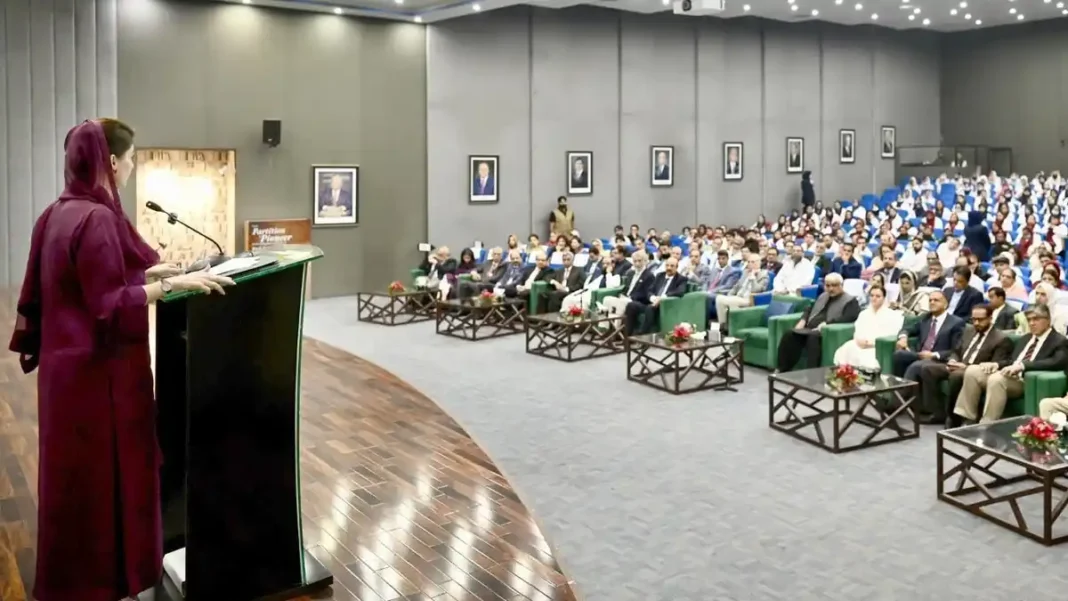
Punjab stroke treatment received an additional Rs5 billion on Thursday, October 29, as Chief Minister Maryam Nawaz Sharif pledged that no stroke patient in the province will be denied care because of a shortage of funds. The Punjab stroke treatment announcement came on Thursday, October 29, at an event marking World Stroke Day at the Punjab Institute of Neurosciences (PINS) in Lahore.
The chief minister also promised stroke, cardiac, paediatric and cancer treatment facilities at every divisional headquarters across the province. She directed officials to inform her directly about any financial requirements for stroke patients, so that funding gaps do not delay treatment.
During her visit to PINS, Maryam Nawaz inspected the intensive care unit and control room, observed neurosurgical procedures from the operating theatre gallery, and met patients. She also watched stroke patients undergo rehabilitation through robotic physiotherapy, a reminder that recovery after a stroke depends on treatment that starts early and continues after the emergency passes.
Punjab stroke treatment: why speed matters
A stroke is a medical emergency, and time decides the outcome. The chief minister said patients have a window of four to five hours during which prompt medical treatment can significantly improve their chances of recovery. She urged people to seek immediate medical help if they notice symptoms such as weakness in an arm or difficulty speaking, and she advised them to call Rescue 1122 without delay.
High blood pressure, diabetes, heart disease and high cholesterol can increase the risk of a stroke, she said, and she stressed that warning signs should never be ignored. Rescue 1122 has already helped save the lives of 85 stroke patients by transporting them to stroke centres in time, according to the chief minister, who commended the rescue service and medical teams for their work.
The cost of treatment is a second barrier, after distance. The chief minister pointed out that the tenecteplase (TNK) injection used in stroke treatment costs around Rs300,000, which puts it beyond the reach of many ordinary families. Patients from distant districts, such as Rahim Yar Khan, also face long journeys to Lahore for specialised care. Local stroke facilities, she said, would let patients receive timely care closer to home.
Punjab stroke treatment: how the network has grown
Punjab now has 40 stroke centres, including 38 primary centres and two comprehensive centres, according to Provincial Health Minister Salman Rafique. The chief minister announced that 15 additional stroke centres would be established, which would take the network to 55 centres. That growth is striking: the province had only 16 primary stroke centres a short time ago, so the network has more than doubled to 40, with 15 more now planned.
PINS Executive Director Dr Asif Bashir and head of neurology Dr Qasim Bashir are training doctors and nurses to strengthen specialised stroke care, the chief minister said. Training matters as much as buildings, since a stroke centre without trained staff cannot deliver time-critical treatment.
Stroke treatment is already available at PINS and General Hospital in Lahore, the Rawalpindi Institute of Cardiology, and Sheikh Zayed Hospital. Services are being extended to Holy Family Hospital in Rawalpindi and to hospitals in Multan and Faisalabad, which will shorten journeys for patients in the north and centre of the province.
Punjab stroke treatment: cardiac, children and cancer care
The announcement went beyond stroke care. The chief minister said heart transplant surgeries would begin soon at the Jinnah Institute of Cardiology in Lahore. She also said state-of-the-art catheterisation laboratories are planned in 20 districts, with facilities already established in eight or nine districts.
A paediatric centre will be established in every division, so parents do not have to travel to Lahore when their children need specialised treatment. A cancer hospital is also being built in Lahore to provide free treatment to underprivileged patients, with a pain management centre for patients with advanced cancer. That project sits alongside the Rs10 billion Punjab cancer hospital project already under way, and it follows the free treatment announced at the Pak-China Friendship Hospital in Islamabad, which shows how free specialised care has become a central promise of current health policy.