Pakistan Imports Record Battery Storage in First Half of 2026
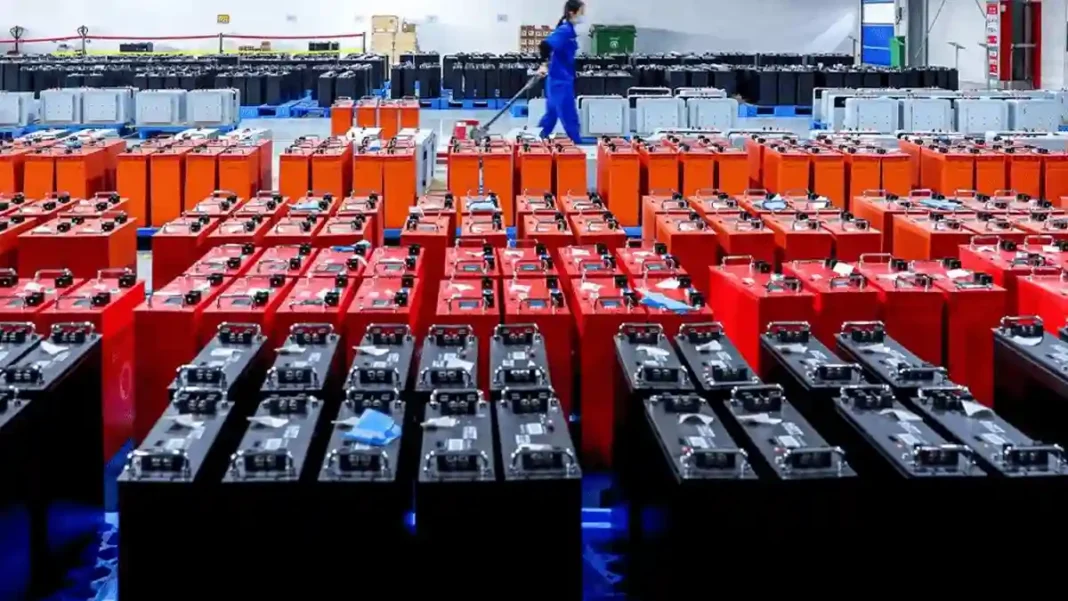
Pakistan imported more than 4.5 gigawatts (GW) of battery storage equipment in the first half of 2026, a Pakistan Solar Association representative said. The Pakistan battery storage imports 2026 figure is nearly half of the country’s cumulative historical imports of 9.5GW, which means about 47 per cent of all battery storage Pakistan has ever imported arrived in just six months.
The growth was discussed at a parliamentary dialogue organised by the Parliamentary Forum on Energy and Economy, where lawmakers warned that policy has not kept pace with households and firms buying storage to cut electricity costs.
Pakistan battery storage imports 2026: why demand jumped
Convener MNA Sher Ali Arbab said Pakistan needed long-term energy planning, adding that battery storage would play an important role in improving power sector efficiency over the next two decades. He said expensive electricity generation capacity remained underused during daytime hours, while demand from electric vehicles and data centres kept expanding.
Arbab called for a transparent legislative framework developed through cross-party consensus. Co-convener MNA Dr Nafisa Shah warned against unregulated imports of substandard batteries, and stressed the need for safety standards, testing facilities and recycling arrangements. She said energy policy should balance grid stability with public welfare and make sure clean energy benefits reached low-income households.
Moderator Usama Mela highlighted the effect of battery energy storage systems on electricity distribution, warning that more consumers could leave the national grid. He said an unmanaged shift away from the grid could put further financial pressure on electricity tariffs.
MNA Chaudhry Mubeen Arif Jutt and MNA Asad Alam Niazi also raised concerns about industrial investment being diverted from production equipment towards energy systems. Jutt said industrialists were investing heavily in captive solar and battery storage to secure affordable electricity and remain competitive with foreign rivals. He warned that weak market-based procurement arrangements could raise costs for consumers unable to afford storage systems.
Taxes push a basic battery above Rs250,000
Pakistan Solar Association Vice Chairperson Engr Chaudhry Uzair raised concerns about the tax burden on battery storage equipment, saying cumulative taxes and customs duties amounted to 35 per cent to 40 per cent. He added that a basic 5-kilowatt-hour battery cost more than Rs250,000, limiting affordability for lower-income households.
That price gap is the heart of the debate. Storage is growing fastest among households and firms that can pay upfront, while the households facing the highest bills relative to income are the least able to buy in. Shah’s call for safety standards and recycling also points to a second risk: cheap, untested imports could fail early and leave buyers with no remedy.
On provincial concerns under the 18th Amendment, Sanaullah Baloch and Phullain called for a more decentralised approach to policymaking. They said Balochistan’s mineral resources, including potential lithium deposits, could support local battery manufacturing and employment, and called for provincial consultation on mineral extraction and related projects. Feature Pakistan reported on a lithium battery plant planned for Rawalpindi, a sign that domestic manufacturing is already part of the same story.
Power Division plans four pilot storage projects
Syed Faizan Shah, adviser to the Power Division, said the division would invite competitive tenders within 15 days for four pilot battery energy storage projects, each with a capacity of 10 megawatt-hours. The projects will be developed across the Lahore, Multan, Islamabad and Peshawar electricity distribution companies.
Shah also said the National Electric Power Regulatory Authority (Nepra) was designating battery storage as a regulated asset. The move would allow distribution companies to ease pressure on overloaded transformers at a lower cost than building new grid stations.
Lahore Electric Supply Company Chairman Amir Zia said distribution transformers faced reverse power flows from rooftop solar systems during the day, followed by sharp increases in demand in the evening. He said battery storage could help retain surplus daytime electricity for use during peak evening hours.
The dialogue concluded with participants agreeing that utility-scale and distributed battery storage systems were becoming increasingly important for Pakistan’s power sector. Whether the pilots arrive fast enough to shape a market already moving at this pace is the next test.