This Gurdwara Bhai Bahlol, Qadiwind travel guide takes you to one of the quietest, most meaningful Sikh heritage sites in Pakistani Punjab: the village shrine of a devotee of Guru Amar Das, the third Sikh Guru, near Kasur. Also, inside you will find the real story of Bhai Bahlol and the water tank built on his land, where the gurdwara stands today, how to reach Qadiwind from Lahore, Islamabad and Karachi, the best time to visit, where to stay and eat, and practical tips for a respectful heritage trip.
Quick Facts
- Location: Outside Qadiwind village, tehsil and district Kasur, Punjab, Pakistan
- Altitude: Around 200 metres above sea level (Punjab plain)
- Famous For: One of the only two shrines in Pakistan associated with Guru Amar Das, the third Sikh Guru; the water tank and rooms built on land donated by Bhai Bahlol; Bhai Bahlol’s samadh beside them
- Nearest City: Kasur city, a short drive away
- Accessibility: Reached by a metalled road from Kasur; tongas and rickshaws run to the village; the shrine itself lies just outside the village settlement
- Known Landmarks: Bhai Bahlol’s samadh, the old water tank of Guru Amar Das, the village of Qadiwind — home of Punjabi writer Baba Sohan Singh Sital
- Best For: Sikh heritage travellers, history lovers, and anyone tracing the footsteps of the early Gurus in Pakistan
Why Visit Gurdwara Bhai Bahlol, Qadiwind
Some journeys are not about grand domes or polished courtyards; they are about standing where history actually happened. Also, Qadiwind is one of those journeys. This is one of only two places in Pakistan associated with Guru Amar Das, the third Sikh Guru. A rare distinction in a country whose Sikh heritage is overwhelmingly linked to the other nine Gurus. For anyone tracing the Guru’s footsteps, Qadiwind is not optional; it is essential.
The Giver of Land
The story here is beautifully human. No king commissioned this shrine and no army defended it. A devotee named Bhai Bahlol simply gave his land, and on it rose a water tank and a few rooms so that travellers would have water and shelter — the oldest form of Sikh service. A wealthy visitor from Delhi paid for the construction so his name would be remembered. Centuries later, it is Bhai Bahlol’s name, the giver of land, that the shrine still carries. If you have ever wondered what Sikh heritage looks like at its most humble and sincere, this is your answer.
Qadiwind also rewards the traveller who loves the wider landscape. Meanwhile, a short distance away stands the second Guru Amar Das shrine of Pakistan, in Tergay village. The old border villages of Kasur district hold shrines of other Gurus too. The India-Pakistan border itself runs just a few kilometres to the east. Kasur city, with the shrine of Baba Bulleh Shah and the lively Ganda Singh Wala border ceremony, makes a natural base. Put them together and you have a full day of heritage that few travellers — Pakistani or foreign — have ever attempted.
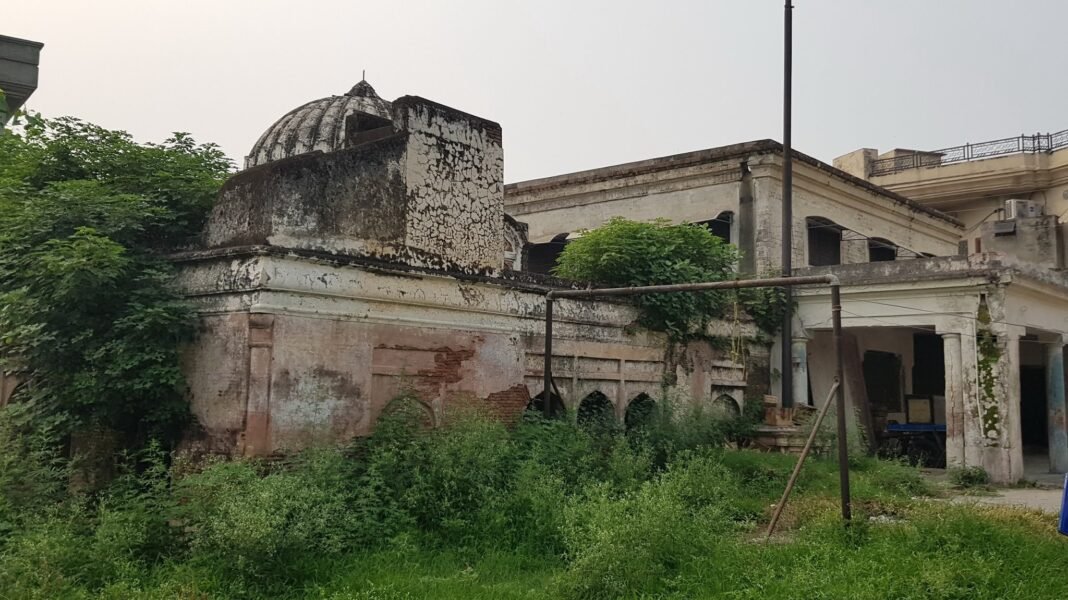
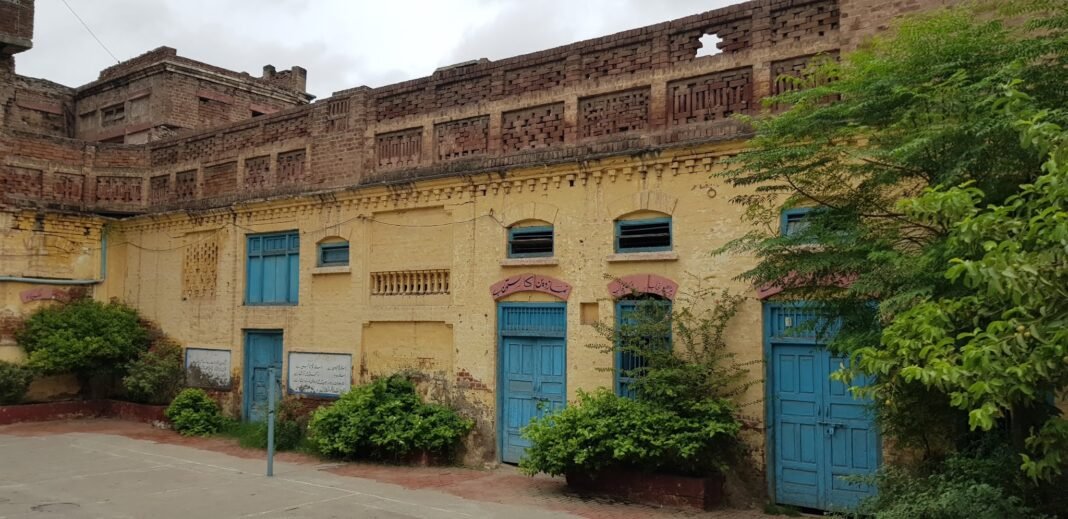
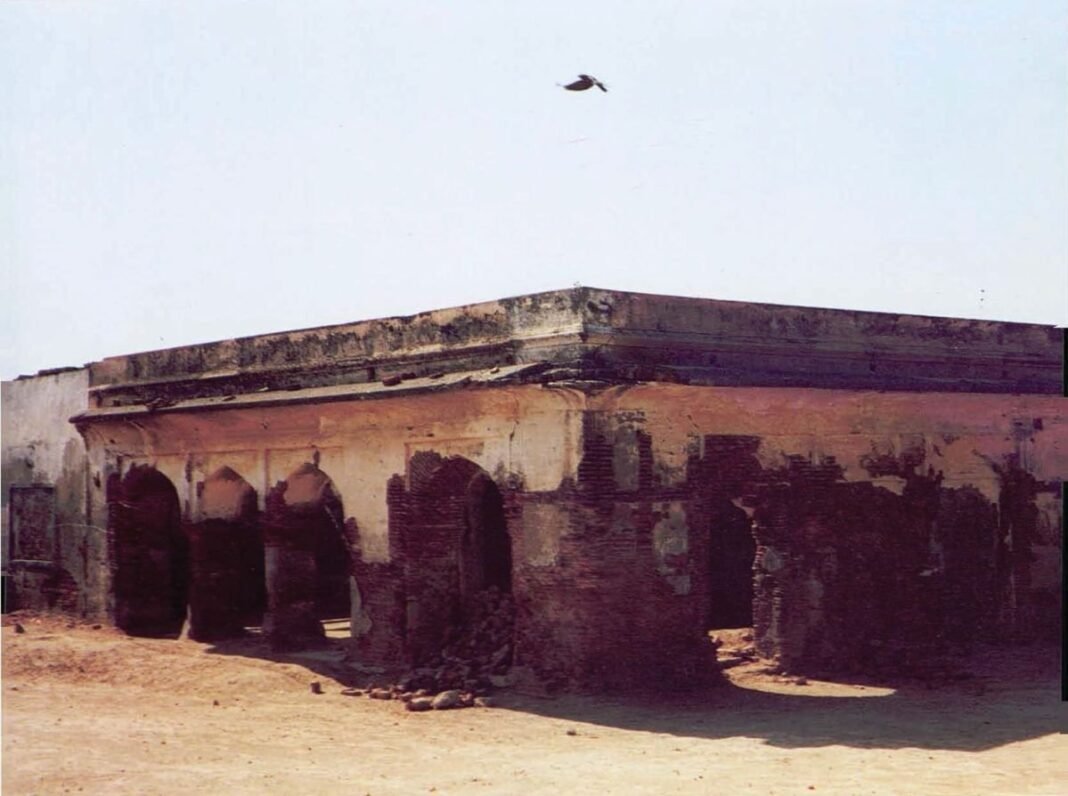
Be honest with yourself before you go: this is not a polished pilgrim complex. Also, the tank has silted up, the samadh needs repair, and a government school now occupies the old rooms. Visit Qadiwind for the history, not the buildings. And you will leave with one of the most genuine travel stories in Punjab.
History of Gurdwara Bhai Bahlol, Qadiwind
The history of this shrine begins in the 16th century, during the lifetime of Guru Amar Das (1479–1574), the third Sikh Guru. Accounts of Sikh shrines in Pakistan record that the Guru stayed at Qadiwind during his travels. The sacred place of the Guru lies just outside the village. While he was there, a wealthy man named Divan Chand of Delhi came to him with a request: he wanted some monument raised with his wealth near the village of Tergy. That his name would be remembered after his death.
With the Guru’s consent, a water tank and residential rooms were constructed — practical charity in the Sikh tradition, giving water and shelter to travellers. The land on which they stood was presented to the Guru by a local devotee, Bhai Bahlol of Qadiwind. Meanwhile, After Bhai Bahlol’s death, his samadh (memorial) was built beside the tank and the rooms. In fact, the shrine came to be known by his name: Gurdwara Bhai Bahlol.
The Faded Saradhan Fair
In the old days, a fair used to be held here on the 7th of Saradhan, drawing devotees from the surrounding villages. After the Partition of 1947, like so many Sikh shrines in Pakistan, the site fell into quiet neglect. Also, a survey of the shrine found the tank turned into a pond of stagnant water, Bhai Bahlol’s samadh close to collapse. A government school housed in the gurdwara’s rooms, with the land itself in the possession of the Waqf Board.
Qadiwind itself has its own place in literary history. Also, the well-known Punjabi writer Baba Sohan Singh Sital was a resident of this village. His house and garden were still standing when surveyed, though occupied by refugee families from Mewat. For the cultural traveller, that detail adds a second layer to the visit: this little border-district village produced both a saint’s shrine and a writer’s home.
Today the shrine’s greatest significance is rarity. Also, a Dawn feature on Pakistan’s forgotten border-district gurdwaras notes that the Qadiwind and Tergay shrines are the only two gurdwaras associated with Guru Amar Das in Pakistan. In fact, and that the Guru is said to have tied his horse at Tergay on his way to Kasur. That makes this quiet corner of Kasur district a genuine pilgrimage, not just a stop on a tour.
Top Things to Do in Gurdwara Bhai Bahlol, Qadiwind
See the Samadh of Bhai Bahlol
The heart of the visit is the samadh of Bhai Bahlol, the devotee whose donated land gave the shrine its name. Also, a samadh is a memorial raised over a revered person’s resting place, and in Sikh tradition such memorials were often built for the Guru’s closest companions. Stand beside it and consider the simple transaction that created this place: land freely given, a tank dug for travellers, a name that outlived empires. Surveys have reported the structure in fragile condition, so view it with care and do not climb on it.
Walk Around the Old Water Tank
The water tank that Guru Amar Das had built — funded by Divan Chand of Delhi — was the shrine’s original reason for being. Also, In the 16th century, a reliable tank in a Punjab village was life itself, and in Sikh tradition the digging of tanks and wells (think of the great Baoli Sahib at Goindwal, built under the same Guru) was an act of devotion. In fact, the tank here has silted over the decades. Its outline and the memory of what it meant remain the most tangible link to the Guru’s visit.
Visit the Old Rooms and the Village School
The residential rooms constructed alongside the tank — the simple lodgings for travellers that Bhai Bahlol’s generosity made possible — now house a government school. Also, you can see the building from outside and appreciate how the shrine’s fabric has been absorbed into village life. If school is in session, keep your distance and do not disturb the children. A polite word with the staff is the right way to ask about the building’s history.
Trace Baba Sohan Singh Sital’s Village
For lovers of Punjabi literature, Qadiwind offers a bonus: this was the home village of Baba Sohan Singh Sital, a well-known Punjabi writer. His house and garden were recorded as still standing in the village. Also, a walk through Qadiwind’s lanes, asking the older residents about the writer’s house, is a gentle way to meet the village and hear its stories firsthand.
Famous Places In and Around Gurdwara Bhai Bahlol, Qadiwind
Tergay village gurdwara — a few kilometres away, the second and only other Guru Amar Das shrine in Pakistan, marking the spot where the Guru is said to have tied his horse on his way to Kasur. Padhana village — an old settlement near the border with a large, locked gurdwara associated with Guru Hargobind, the sixth Guru. Kasur city — the district town, home to the shrine of the great Punjabi Sufi poet Baba Bulleh Shah. Ganda Singh Wala border — the flag-lowering ceremony at the Pakistan-India border near Kasur, a stirring evening spectacle. Kasur Museum and old city bazaars — for Kasuri methi (fenugreek) and the town’s famous sweets.
How to Reach Gurdwara Bhai Bahlol, Qadiwind
Qadiwind is in Kasur district, south of Lahore and close to the Indian border. The standard approach is to travel to Kasur city first, then take the metalled road from near Steel Bagh District Hospital out to the village. Also, tongas (horse-drawn carriages) and rickshaws to the village are easily available from Kasur. A local driver in Kasur will know Qadiwind well.
From Lahore: Around 55–60 kilometres south via Ferozepur Road, roughly 1 to 1.5 hours by car depending on traffic. Also, this makes Qadiwind an easy half-day trip from Lahore — combine it with Tergay and Kasur city for a full heritage day.
From Islamabad: Around 375 kilometres via the M-2 motorway to Lahore and then south to Kasur, roughly 5 to 6 hours of driving. Most travellers from the capital break the journey with a night in Lahore.
From Karachi: Around 1,200 kilometres via the M-9, N-5 and motorway network — a long two-day drive. Also, flying to Lahore and hiring a car is the sensible option.
Nearest airport: Allama Iqbal International Airport, Lahore, around 70–80 kilometres from Kasur. Rail: Kasur Junction has rail links with Lahore. Also, from the station take a rickshaw or tonga to the village road. Road conditions: The road from Kasur to Qadiwind is metalled. Village lanes are narrow. Winter fog (December–January) can slow early-morning driving in this belt, so plan midday travel in fog season.
Route Details
Step 1: Reach Kasur city from Lahore via Ferozepur Road (N-5) or from the motorway network. Step 2: In Kasur, head toward Steel Bagh / District Hospital area. Also, the metalled village road to Qadiwind begins here. Step 3: Drive or take a tonga/rickshaw to Qadiwind village. The shrine of Guru Amar Das lies just outside the village. Step 4: If combining with Tergay, ask locally for the connecting village road — distances between these border villages are short. Step 5: Return to Kasur for food and onward transport. Do not plan to stay overnight in the village itself.
Where to Stay in Gurdwara Bhai Bahlol, Qadiwind
Qadiwind is a village, not a tourist town, so plan your overnight stay in Kasur city or Lahore. Kasur has a handful of modest guesthouses and budget hotels clustered near the city centre and the bus stands — simple, clean rooms of the kind that serve traders and wedding parties. They are functional rather than luxurious, so set expectations accordingly.
Most visitors do Qadiwind as a day trip from Lahore, where the full range of accommodation exists: luxury hotels in Gulberg and DHA, mid-range business hotels near the airport and on Mall Road, and budget options around the railway station. Staying in Lahore also lets you pair the trip with the city’s own heritage — the Fort, Badshahi Mosque and Shalimar Gardens — on the following day.
If you are on a longer heritage circuit of Kasur district’s gurdwaras, Kasur city is the practical base: it puts you within easy reach of Qadiwind, Tergay and Padhana. The Ganda Singh Wala border in the evening. Book ahead only if you are travelling on a public holiday; on ordinary days, walk-in rooms are usually available.
Where to Eat: Local Foods of Gurdwara Bhai Bahlol, Qadiwind
The Kasur belt serves the hearty food of central Punjab, and the village dhaba is part of the experience. Also, expect tandoori rotis hot from the clay oven, dal, sabzi and, in season, sarson da saag with makki di roti in winter. The dish this region does best. Kasur city is famous for Kasuri methi (dried fenugreek leaves), which flavours local curries, and for its sweets. Pick up a box of the town’s mithai before you leave.
A simple village meal — dal, roti, lassi — is budget-friendly and filling. Also, In Kasur’s bazaars you will find kebab and tikka shops, chana chaat stalls. In fact, the ubiquitous dhabas serving karahi and daal fry. Drink bottled or freshly boiled water in the villages, and try the sweet lassi: Punjab’s signature cooler, churned thick and served in tall glasses. For travellers combining the trip with Lahore, the city’s food streets (Fort Road Food Street near Badshahi Mosque) offer everything from nihari to falooda in the evening.
Weather in Gurdwara Bhai Bahlol, Qadiwind
Qadiwind sits on the Punjab plain. Also, its weather follows the classic central-Punjab cycle: a short, foggy winter, a glorious spring, a fierce summer. In fact, a monsoon that breaks the heat. The shrine is outdoors and the village lanes are unshaded. The cool months are by far the most comfortable for walking around. Summer visits are possible but should be limited to early mornings.
| Season | Temperature Range | Conditions |
|---|---|---|
| Winter (Dec–Feb) | 5–20°C | Cool and pleasant by day; dense fog on many mornings, especially December–January |
| Spring (Mar–Apr) | 20–32°C | The best weather — warm days, cool evenings, wheat fields turning gold |
| Summer (May–Jul) | 32–45°C | Very hot and dry; dust storms possible; carry water and avoid midday |
| Autumn (Aug–Nov) | 25–38°C | Monsoon humidity in Aug–Sep, then clear and pleasant from October |
Language and Culture of Gurdwara Bhai Bahlol, Qadiwind
Punjabi is the language of Qadiwind — spoken in homes, fields and bazaars — with Urdu widely understood. Also, the village culture is the warm, hospitable culture of rural central Punjab: expect to be offered tea, expect curiosity about where you have come from, and expect help finding your way.
Because this is a Sikh shrine, observe the usual courtesies: cover your head before entering the shrine area, remove shoes where required, and dress modestly (covered shoulders and knees for both men and women). Do not smoke or carry tobacco near the shrine. Photography of the buildings from outside is generally acceptable, but ask before photographing people, and never photograph the schoolchildren without the staff’s permission.
The village also carries the memory of Partition in its bones — refugee families from Mewat settled here in 1947. The shrine’s land is held by the Waqf Board. A respectful interest in that layered history, rather than loud commentary on it, is the right tone for conversation with locals.
Shopping in Gurdwara Bhai Bahlol, Qadiwind
Qadiwind village itself has only everyday shops, so do your souvenir hunting in Kasur city. Also, Kasur’s bazaars are known for Kasuri methi — buy the dried leaves in bulk. They keep for months and transform a home curry. The town’s sweet shops sell excellent mithai. The old bazaar has the usual Punjab mix of khussa shoes, phulkari-style embroidery and everyday brassware.
There are no shopping malls in the village or on the village road. Kasur city has small commercial plazas but nothing of the large-mall variety. For serious shopping, Lahore’s malls (Emporium, Packages) are an hour away. If you visit on the way to the Ganda Singh Wala border, the roadside stalls near the border sell flags, caps and snacks for the ceremony crowd.
Travel Tips for Gurdwara Bhai Bahlol, Qadiwind
Packing Essentials
Carry a head covering (a light scarf or rumal) for the shrine, comfortable walking shoes for uneven village ground, sun protection for the open tank area, and drinking water. Also, there are no tourist facilities at the shrine itself. In fact, In winter (December–February), pack a warm jacket and a shawl; mornings are genuinely cold and foggy. A small first-aid kit and any personal medication are wise, as the nearest proper pharmacy is back in Kasur city.
Safety Tips
Kasur district is a normal, settled part of Punjab and day visits are straightforward. Also, keep to daylight hours in the villages, let your driver wait for you, and keep valuables out of sight as you would anywhere. The shrine structures are old — do not climb on the samadh or lean on fragile walls. Because the border with India runs close by, stay on the main village roads and do not wander toward the border fence. Photography near border installations is prohibited.
Money & Connectivity
Carry cash in Pakistani rupees. There are no card machines in Qadiwind, and even in Kasur’s bazaars cash rules. ATMs are available in Kasur city, so withdraw before heading to the village. Mobile signals (Jazz, Zong, Telenor, Ufone) cover the Kasur district well, including the villages. Data speeds are adequate for maps and messaging. Download offline maps of the Kasur area before you go, since village lanes are easy to miss.
Best Time to Visit Gurdwara Bhai Bahlol, Qadiwind
Winter (November–February): The Ideal Season
This is the window every source recommends, and for good reason. Also, daytime temperatures sit in the comfortable teens, the wheat fields are green, and walking around the tank and samadh is a pleasure. Fog can delay early starts in December and January, so aim to reach the village by late morning.
Spring (March–April): Beautiful and Quiet
Spring is nearly as good as winter — warm days, golden harvest fields, and very few visitors. If you dislike the winter fog, March is arguably the single best month for photography and unhurried exploration.
Summer (May–July): Only for the Determined
Daytime heat crosses 40°C and the open ground around the shrine offers no shade. If you must come in summer, arrive at sunrise, finish by 9 a.m., and retreat to Kasur or Lahore for the rest of the day. Carry far more water than you think you need.
Autumn (August–October): The Monsoon Break
August and September bring humidity and rain; the village tracks can get muddy. Also, From October the weather clears beautifully and the crowds are nil — a fine shoulder season for the flexible traveller.
Final Thoughts
Gurdwara Bhai Bahlol at Qadiwind will not impress anyone looking for marble and gold. Also, its power is quieter: a devotee’s gift of land, a Guru’s blessing on a village tank, a name remembered for four centuries. In fact, In a country full of grand monuments, there is something deeply moving about a shrine built on such a simple, generous act — and about the fact that this is one of only two places in Pakistan where Guru Amar Das left his mark.
Go in winter, pair it with Tergay and Kasur city, walk the village lanes with respect, and listen to what the older residents remember. Also, you will come home with a story that almost no other traveller can tell. For more heritage journeys across the province, browse the Explore Pakistan collection, and if Sikh heritage is your thread, read our Ali Baig Gurdwara travel guide next.
FAQs
Where is Gurdwara Bhai Bahlol located?
Just outside Qadiwind village in tehsil and district Kasur, Punjab, reached by a metalled road from near Steel Bagh District Hospital in Kasur city.
Which Guru is associated with Gurdwara Bhai Bahlol?
Guru Amar Das, the third Sikh Guru. They stayed at Qadiwind during his travels. Also, it is one of only two shrines in Pakistan linked to him.
What is the best time to visit Qadiwind?
November to March, when daytime temperatures are cool and pleasant. March is excellent for avoiding winter fog.
How do I reach Qadiwind from Lahore?
Drive about 55–60 km south to Kasur city via Ferozepur Road (1–1.5 hours), then take the village road from near the District Hospital. Tongas and rickshaws are available.
Is the gurdwara safe to visit?
Yes — Kasur district is settled and safe for day visits. Also, keep to daylight hours, respect the school operating in the old rooms, and stay on main roads near the border belt.
Is it suitable for families?
Yes, as a short heritage stop. There are no tourist facilities at the shrine, so bring water, snacks and sun cover for children.
Where can I stay near Qadiwind?
In Kasur city’s guesthouses or, more comfortably, in Lahore — an easy day trip away.
What food should I try in the area?
Kasuri methi-flavoured dishes, winter sarson da saag with makki di roti, fresh tandoori rotis, sweet lassi. Also, Kasur’s famous mithai.