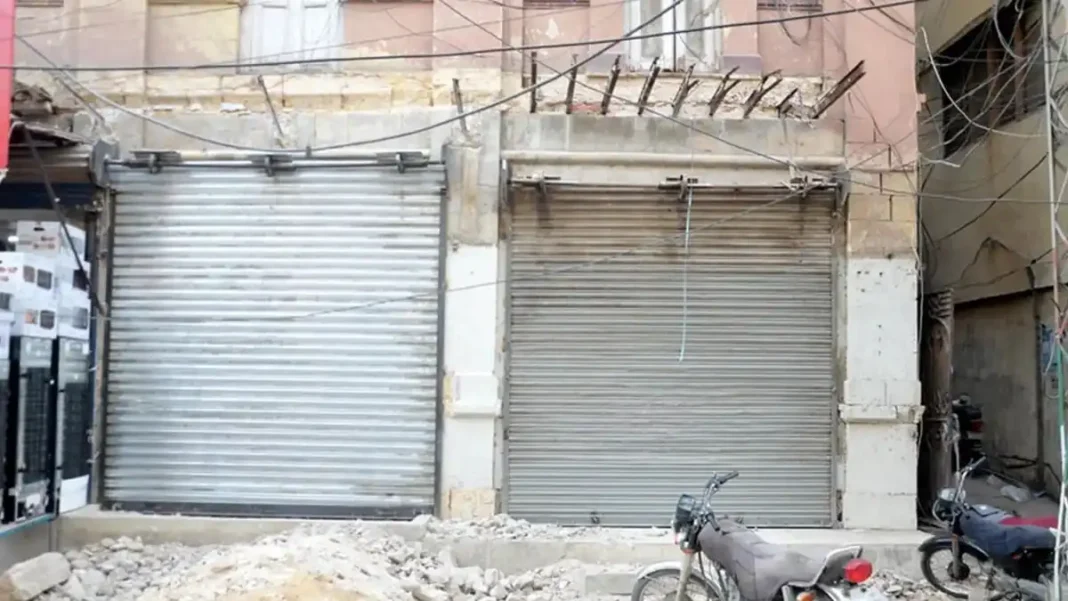
Hyderabad Stops Demolition of 1936 Building
The district administration in Hyderabad has stopped the demolition of a 90-year-old historic building after it was partly demolished, despite being recommended for heritage protection. The Hyderabad historic building, constructed in 1936 near Faujdari Road, was being pulled down when City Assistant Commissioner Noor Hussain intervened and stopped the work.
The Sindh Culture Department had recommended the property for heritage protection in February 2025, because of its architectural significance. Its official heritage status, however, is still awaiting approval from the relevant technical committee. That gap between recommendation and approval is at the heart of this case.
The building was recommended for protection because of its distinctive features, including projecting balconies with carved stonework and large windows with wooden panels. The recommendation also noted that the structure needed repairs, because it posed potential public safety risks.
Hyderabad historic building: why the law was broken
After the intervention, the assistant commissioner issued notices to the people claiming ownership of the property. They must submit ownership documents, permits and relevant approvals within three days. The Culture Department’s Antiquities and Archaeology wing also issued a notice over the unauthorised demolition, and directed the property owner to appear before the department on November 2.
The department said the demolition violated Section 10(i) of the Sindh Cultural Heritage (Preservation) Act, 1994, because the work was carried out without prior permission. The owner was ordered to stop all activity at the site or face legal consequences.
The Sindh Building Control Authority has also been asked not to approve any demolition or construction work on the site until the Technical Committee on Sindh Cultural Heritage makes a final decision on the property’s status. That freeze is meant to hold the building in its current state while the heritage question is settled.
The protection gap that allowed partial demolition
The most important fact in this story is timing. The Culture Department recommended protection in February 2025. More than 20 months later, the technical committee had still not given a final decision. During that wait, demolition crews moved in and partly pulled the building down.
A recommendation, on its own, did not stop the work. Only direct intervention by the assistant commissioner did, and only after part of the building was already gone. That sequence raises a plain question for heritage protection in Sindh: what protects a building while its file waits for a committee?
The answer, in this case, came from the 1994 Act. Section 10(i) requires prior permission for work on a property under consideration, and the Culture Department says that permission was never given. If that reading holds, the demolition was unlawful from the first blow, not merely from the moment officials arrived.
The safety note in the original recommendation adds a second layer. The building needed repairs and posed potential public safety risks. Owners of old buildings often cite safety as a reason to demolish, while heritage officials cite the same risks as a reason to repair under supervision. The November 2 hearing will need to separate those two arguments, with documents and expert views, rather than letting demolition settle the question by default.
What happens next
Three deadlines now shape the case. The claimants have three days to produce ownership documents, permits and approvals. The owner must appear before the Antiquities and Archaeology wing on November 2. The Technical Committee must still decide whether the building gains formal heritage status.
If the committee grants protection, any future work will need heritage approval, and the partial demolition will stand as a violation to be dealt with under the Act. If it refuses protection, the owner may seek fresh permission to demolish, but through the proper channel this time.
Sindh has many buildings in the same position. Feature Pakistan’s guides to the province’s heritage include the boundary wall of Pucca Fort, where a city lives inside its walls, the Talpur tombs, Sindh’s last royal dynasty, and Khaliq Dina Hall, Karachi’s time machine. Each survives because someone, at some point, chose repair over removal. The Faujdari Road building now depends on the same choice, made in time.
When was the building constructed?
The building was constructed in 1936 near Faujdari Road in Hyderabad, making it about 90 years old.
Why was it recommended for protection?
The Sindh Culture Department recommended it in February 2025 for its architectural significance, including projecting balconies with carved stonework and large windows with wooden panels.