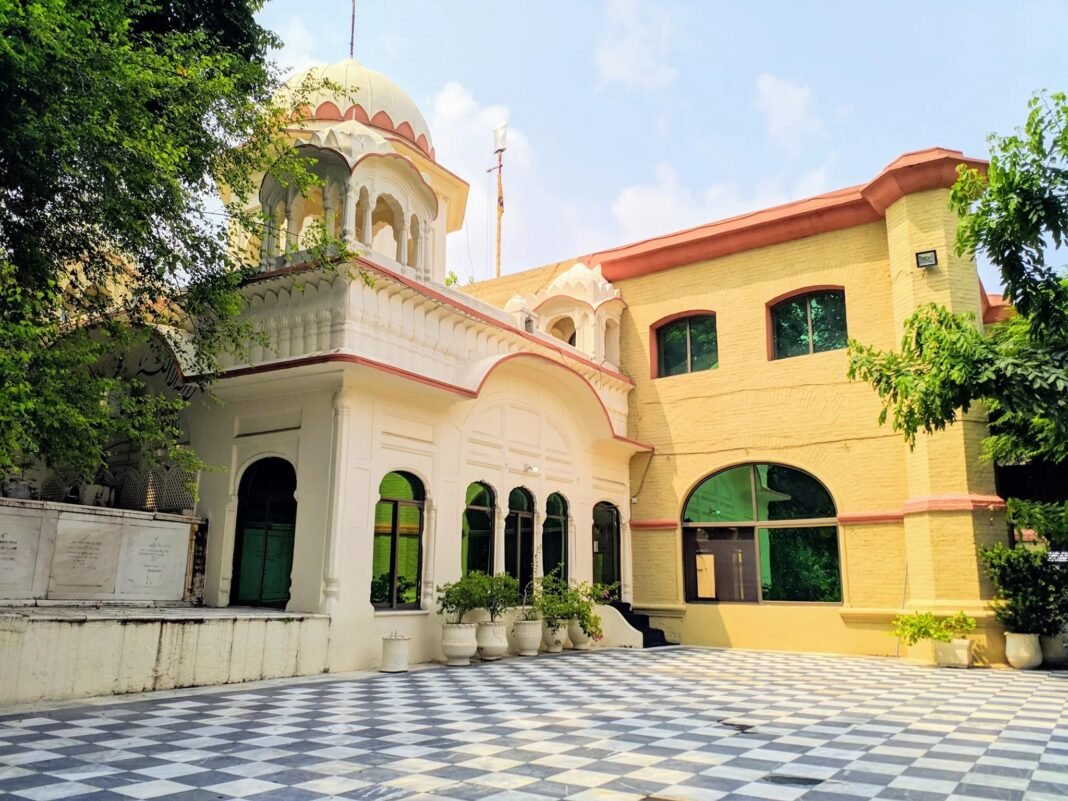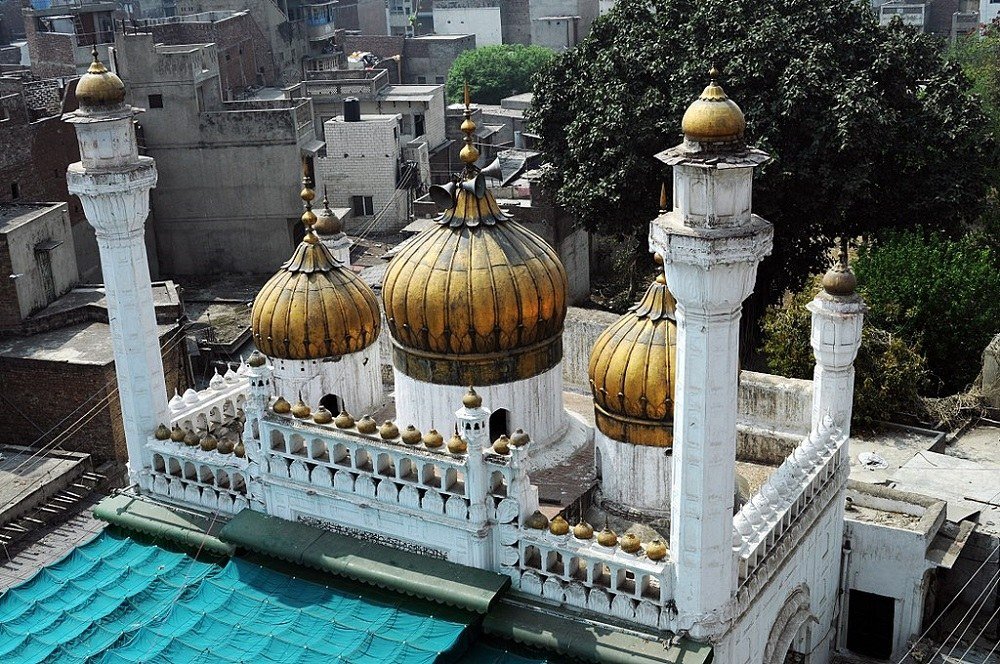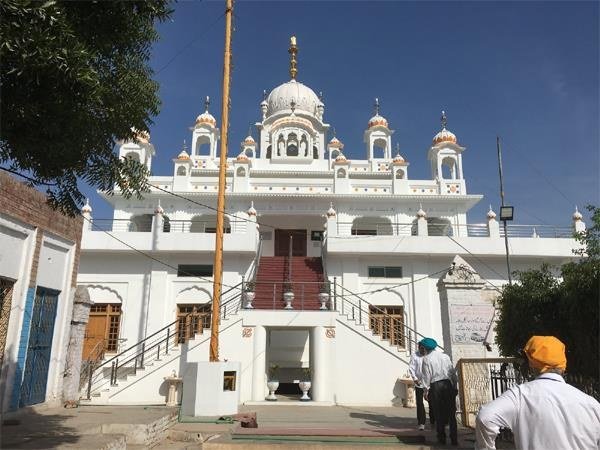
Most visitors to Nankana Sahib come for the grand Gurdwara Janam Asthan, the birthplace of Guru Nanak. But if you want the trip that will stay with you, walk three hundred metres southeast of the main shrine, into a quiet neighbourhood lane, and find Gurdwara Bal Lila Sahib. Also, this is where Guru Nanak played as a child — the open field where a boy who would change the spiritual history of South Asia gathered his friends, invented games, and began sharing the divine Name. It is a place of extraordinary tenderness, freshly restored after a decade of careful renovation.
It deserves a place on every Sikh heritage itinerary in Pakistan.
Quick Facts
- Location: Mohalla Balila, Nankana Sahib, Punjab, Pakistan — about 225–300 metres southeast of Gurdwara Janam Asthan
- Famous For: The childhood playground of Guru Nanak (“Bal Lila” means childhood play); the historic Nanaksar tank built by Rai Bular
- Nearest City: Nankana Sahib town; Lahore is about 75–80 km away
- Accessibility: Good road access via Sheikhupura from Lahore; Nankana Sahib is well signposted for pilgrim traffic
- Known Landmarks: The restored multi-storey shrine building, the dry Nanaksar sarovar, Gurdwara Patti Sahib next door
- Best For: Sikh pilgrims, families with children, history lovers, anyone tracing Guru Nanak’s life
Why Visit Gurdwara Bal Lila Sahib, Nankana Sahib
Think about what this place actually is. Before the journeys, before the teachings, before the founding of a faith followed by tens of millions, Guru Nanak was a boy in this field. He played here. He gathered his friends around and, even in his infancy, began speaking to them about the Naam — the divine Name. “Bal Lila” literally means the play of childhood. This gurdwara exists to mark the ground where the holiest figure in Sikhism was simply a child at play. There is no grander claim a heritage site can make than that, and no simpler one.
That is the first reason to come: intimacy. The great shrines of Nankana Sahib inspire awe; Bal Lila inspires something warmer. Parents find it especially moving to stand where a child once played and to tell their own children the story. The shrine’s history is also a beautiful cross-section of Punjab itself — a Muslim ruler who recognised the boy’s holiness, a Mughal-era nobleman who enlarged the tank, a Sikh Maharaja who rebuilt it, and modern volunteers from two countries who spent ten years restoring it stone by stone. Every community in Punjab’s past has left a fingerprint here.
A Decade of Kar Sewa
The second reason is practical: it is finally open again. Also, the building had been closed to visitors for years and underwent a decade-long Kar Sewa (voluntary restoration) completed around 2019, carried out jointly by the UK-based Jatha Guru Ka Bagh, Baba Jagtar Singh Kar Sewa Wale of Tarn Taran, Pakistan’s Evacuee Trust Property Board and the Pakistan Sikh Gurdwara Parbandhak Committee. The langar hall, Parkash Asthan and Sukhasan Sthan were all renovated. The daily Parkash of the Guru Granth Sahib has resumed. You are visiting at a good moment in this shrine’s long life.
Finally, Bal Lila completes the Nankana Sahib experience. Also, most tourists see Janam Asthan and leave. The town is dotted with shrines marking episodes of Guru Nanak’s early life — Patti Sahib where he went to school, Tambu Sahib where he hid from his father’s anger, Kiara Sahib where a miracle saved a farmer’s field. Bal Lila is the most human of them all. Come for the history, stay for the feeling.
History of Gurdwara Bal Lila Sahib, Nankana Sahib
The town now called Nankana Sahib was once Talwandi, the village of Rai Bhoe Ki Talwandi, where Guru Nanak was born on 15 April 1469 (Baisakh Sudi 3, 1526 Bikrami). Also, about three hundred metres southeast of the great Janam Asthan stands the field where the young Nanak used to play with the other children of the village. Sikh tradition holds that even as a small boy, he would gather his friends not just for games but to lead them in meditation and to share with them the enlightenment of the Naam. The shrine that marks this ground takes its name from those childhood days.
The first structures here were raised by Rai Bular, the Muslim ruler of Talwandi, who recognised Guru Nanak’s spiritual stature early and built the original holy pond, Nanaksar, in the Guru’s name alongside the first shrine. During a later visit to the town, Guru Hargobind, the sixth Guru, is said to have enlarged the site. In the mid-1700s, Diwan Kaura Mall — a Hindu noble who died in 1752 — further enlarged the gurdwara and brick-lined two sides of the tank that Rai Bular had originally dug, doing so after his victory over Multan with Sikh assistance in 1748.
The Maharaja’s 3,000 Acres
The shrine’s modern form comes from the Sikh Empire era. In 1820–21, Baba Gurbukhsh Singh built the gurdwara building and its adjoining tank in brick on the orders of Maharaja Ranjit Singh, who also donated generous land — about 3,000 acres were allotted to Gurdwara Bal Lila Sahib. Later, Nirmal Mahants began a new building but could not complete it. Control passed to the Parbandhak Committee after the Gurdwara Reform Movement, and in 1945–46 Sant Gurmukh Singh of Patiala completed the building through Kar Sewa, also constructing the steps and boundary wall of the water tank.
After Partition in 1947, management of the shrine passed to Pakistan’s Evacuee Trust Property Board. The water tank fell dry, the daily Parkash of the Guru Granth Sahib ceased, and eventually the dilapidated building was closed to visitors altogether. The revival began with a ten-year Kar Sewa effort that concluded around 2019: the main building was rebuilt, the langar hall, Parkash Asthan and Sukhasan Sthan were renovated. The shrine was thrown open to pilgrims again — with the Parkash now held daily, as the head granthi Sukhbir Singh Maan confirmed to The Tribune at the reopening.
The old sarovar still lies dry and awaits renovation, a reminder that restoration here is an ongoing labour of love.
Top Things to Do in Gurdwara Bal Lila Sahib, Nankana Sahib
Walk the Childhood Playground
Stand in the courtyard and the surrounding ground and picture the scene the shrine commemorates: a boy in the 1470s gathering his friends for games that turned, quietly, into the first teachings of a new faith. Also, this is the emotional core of the visit. Take your time here. Families often find this the most moving stop in Nankana Sahib precisely because it is so human.
See the Restored Shrine Building
The multi-storey domed building you see today is the product of the 1945–46 completion and the recent decade-long Kar Sewa. Also, step inside the prayer hall, where the Parkash of the Guru Granth Sahib is now held daily, and admire the craftsmanship of the restoration. The langar hall and Sukhasan Sthan were part of the same renovation — ask the granthi about the work if he is available. The story of volunteers from Britain, Tarn Taran and Pakistan rebuilding it together is worth hearing.
View the Historic Nanaksar Tank
On the east side of the gurdwara lies the tank first dug by Rai Bular more than five centuries ago, later enlarged by Guru Hargobind, brick-lined by Diwan Kaura Mall and rebuilt under Ranjit Singh. It remains dry today and needs renovation. The stepped edges and boundary wall built by Sant Gurmukh Singh are still there to see. It is a powerful illustration of how many hands, across how many centuries, have cared for this ground.
Combine with Gurdwara Patti Sahib Next Door
Right next to Bal Lila stands Gurdwara Patti Sahib, marking the school where the young Nanak was taught — and where, tradition says, he astonished his teacher with his wisdom. Also, the two shrines together tell the story of the Guru’s childhood in a single short walk. Plan at least an hour for both.
Famous Places In and Around Gurdwara Bal Lila Sahib, Nankana Sahib
- Gurdwara Janam Asthan — 225–300 m away; Guru Nanak’s birthplace and Nankana Sahib’s great central shrine.
- Gurdwara Patti Sahib — next door; the site of the Guru’s school.
- Gurdwara Tambu Sahib — where the young Nanak hid under a tent-like tree after the famous “sacha sauda” episode.
- Gurdwara Kiara Sahib — marks the field a farmer claimed was damaged, where no damage was found.
- Gurdwara Mal Ji Sahib — where the shade-giving tree was found by Rai Bular.
- Baba Guru Nanak University — the university founded at Nankana Sahib, its foundation stone laid during the 550th birth anniversary celebrations.
How to Reach Gurdwara Bal Lila Sahib, Nankana Sahib
Nankana Sahib is one of the most-visited pilgrim towns in Pakistani Punjab, and the road network reflects it.
- From Lahore: About 75–80 km via Sheikhupura; the drive takes roughly 1.5 to 2 hours. Follow signs for Nankana Sahib; within the town, head for Gurdwara Janam Asthan and then walk or drive 225–300 m southeast into Mohalla Balila.
- From Islamabad: About 300–310 km via the M-2 motorway toward Lahore, then the Sheikhupura–Nankana road; roughly 4 to 4.5 hours.
- From Karachi: Over 1,100 km by road — fly to Lahore and continue by road (about 1.5–2 hours from the airport).
- Nearest airport: Allama Iqbal International Airport, Lahore.
- Transport options: Private car or hired van is easiest; intercity buses and wagons run between Lahore and Nankana Sahib; within the town, auto-rickshaws and walking cover the short distances between shrines.
Route Details
From Lahore, take the road to Sheikhupura and continue to Nankana Sahib — the route is well signposted, especially during pilgrim season. Enter the town and make for the Gurdwara Janam Asthan complex, the town’s landmark. From there, Bal Lila Sahib is a short walk southeast into Mohalla Balila; Gurdwara Patti Sahib sits next door. A recent heritage survey notes that the shrine’s locks are opened for Sikh yatrees — if you arrive outside pilgrim season and find it closed, ask at the Janam Asthan, whose staff can advise on access.
Where to Stay in Gurdwara Bal Lila Sahib, Nankana Sahib
Nankana Sahib is a pilgrim town, and accommodation is built around that reality. The gurdwara complexes themselves offer pilgrim sarais (rest houses) with simple, clean rooms — these are the most atmospheric option and fill up during Gurpurab and other jatha seasons, so book ahead through the Evacuee Trust Property Board or your tour organiser if you are travelling in a group. The town also has small private hotels and guesthouses of the budget-to-mid-range variety: functional, inexpensive and within walking distance of the shrines. Also, do not expect luxury here — Nankana Sahib is about the experience, not the thread count.
For a more comfortable base with full hotel amenities, many visitors stay in Lahore and make Nankana Sahib a day trip. This is entirely practical at 1.5–2 hours each way.
Where to Eat: Local Foods of Gurdwara Bal Lila Sahib, Nankana Sahib
The defining meal of a Nankana Sahib visit is langar — the free community kitchen at the gurdwaras, where everyone sits together on the floor and eats the same simple, nourishing food: dal, roti, rice and sabzi. Also, do not miss it; it is both lunch and a lesson in Sikh hospitality. In fact, around the town, the food is hearty Punjabi village fare: saag and makai di roti in winter, fresh lassi and doodh patti from milk shops, tandoori parathas, chana and daal fry at the dhabas near the bus stand. Sweet shops sell barfi, jalebi and patisa.
Everything is very budget-friendly — a full dhaba meal costs little by city standards. During pilgrim season, temporary food stalls multiply around the shrines.
Weather in Gurdwara Bal Lila Sahib, Nankana Sahib
Nankana Sahib sits on the central Punjab plains, so expect the region’s classic climate: cold foggy winters, a delightful spring, a punishing summer with monsoon rains. A mild autumn. Pilgrim traffic peaks in the cool months, which is also when the weather is kindest.
| Season | Temperature Range | Conditions |
|---|---|---|
| Winter (Nov–Feb) | Around 4–20°C | Cold, foggy mornings (especially Dec–Jan); pleasant afternoons; peak pilgrim season |
| Spring (Mar–Apr) | Around 15–30°C | Mild and clear; excellent for walking between the town’s shrines |
| Summer (May–Jul) | Around 30–45°C | Very hot; monsoon humidity and downpours from July |
| Autumn (Sep–Oct) | Around 15–30°C | Mild and pleasant as the monsoon retreats |
Language and Culture of Gurdwara Bal Lila Sahib, Nankana Sahib
Punjabi is the language of Nankana Sahib — spoken in the homes, the bazaars and the gurdwara courtyards. Also, urdu is universally understood and works fine for visitors; English is spoken by guides and hotel staff. In fact, the town’s culture revolves around the gurdwaras: life here moves to the rhythm of prayer times, langar hours and the pilgrim calendar. Visitors should dress modestly, cover their heads inside any gurdwara (scarves are available at entrances), remove shoes before entering, and accept langar with the right hand.
The local community — Muslim residents alongside visiting Sikh pilgrims from around the world — is accustomed to guests and notably warm toward them. A small Punjabi greeting goes a long way.
Shopping in Gurdwara Bal Lila Sahib, Nankana Sahib
Shopping in Nankana Sahib is pilgrim shopping. The bazaars around Janam Asthan sell religious items — rumallas (cloths for the Guru Granth Sahib), khandas, Sikh literature and music, framed pictures of the Gurus, and kara bracelets. You will also find Punjabi handicrafts, phulkari embroidery, and local sweets to take home. There are no shopping malls here. That is part of the charm — the bazaar is traditional, compact and easy to walk. Prices are modest; bargaining is normal but keep it friendly, especially around the shrines.
Local Events and Festivals
Nankana Sahib’s calendar is defined by two major Sikh observances, both of which bring the town — and Bal Lila Sahib with it — vividly to life. The biggest is Guru Nanak’s birth anniversary (Gurpurab) in November. Thousands of pilgrims, including large jathas from India, converge on the town. The shrines stay open late, langar runs around the clock, and the whole town glows. The second is the Saka Nankana Sahib commemoration in February, marking the martyrdom of Sikhs at Janam Asthan in 1921 — a solemn and deeply significant gathering.
If you want to see Bal Lila at its most alive, time your visit for one of these. If you prefer quiet reflection, come in the weeks between.
Travel Tips for Gurdwara Bal Lila Sahib, Nankana Sahib
Packing Essentials
A headscarf or bandana for gurdwara visits, slip-off shoes, modest clothing, and a light shawl for cool evenings. Also, In December–January, pack a proper warm jacket — the foggy mornings are genuinely cold. In fact, sunscreen and a water bottle are musts from March onward.
Safety Tips
Nankana Sahib is a well-established pilgrim town and safe for visitors, including foreign tourists and cross-border jathas. The shrine lanes are best explored on foot during daylight. Keep your belongings secure in crowds during festival season.
Money & Connectivity
Carry cash — small-town bazaars and dhabas run on it. ATMs, while present in town, can run dry during big pilgrim gatherings. Also, all major mobile networks cover Nankana Sahib with 4G data.
Best Time to Visit Gurdwara Bal Lila Sahib, Nankana Sahib
Winter (November to February)
The prime season. Cool, crisp days are perfect for walking between shrines. This is when the great events happen — Guru Nanak’s Gurpurab in November and the Saka commemoration in February. Expect crowds at the main shrine, but Bal Lila itself stays peaceful.
Spring (March to April)
Mild weather and thinner crowds make this an excellent time for a relaxed, reflective visit. Also, the town is quiet, the lanes are walkable, and you will often have the smaller shrines nearly to yourself.
Summer (May to August)
Hot and best avoided if you have a choice; temperatures soar past 40°C and the monsoon brings humidity. If you must come, visit the shrines early morning and rest midday.
Autumn (September to October)
A pleasant shoulder season — the monsoon has passed, the air is clear, and pilgrim numbers are low. Also, a lovely time for photography and unhurried exploring.
Final Thoughts
Gurdwara Bal Lila Sahib is proof that the most powerful heritage sites are not always the grandest ones. Also, a field where a child played, a tank dug by a ruler who saw something holy in a boy, a building raised and rebuilt by five centuries of devoted hands — this is history at its most human. Meanwhile, after a decade of restoration, it is ready to welcome you.
Come for Janam Asthan, but stay for Bal Lila. Walk the three hundred metres, stand where Guru Nanak played, and then continue the journey through Nankana Sahib’s other childhood shrines. For more Sikh heritage journeys across Pakistan, explore our Explore Pakistan collection, including our Ali Baig Gurdwara travel guide and the dramatic story of Gurdwara Bair Sahib, Sialkot.
FAQs
Where is Gurdwara Bal Lila Sahib located?
In Mohalla Balila, Nankana Sahib, about 225–300 metres southeast of Gurdwara Janam Asthan, with Gurdwara Patti Sahib next door.
Why is Gurdwara Bal Lila Sahib significant?
It marks the field where Guru Nanak played as a child and shared the divine Name with his friends — “Bal Lila” means childhood play.
What is the best time to visit?
November to February — Guru Nanak’s Gurpurab falls in November and the Saka Nankana commemoration in February. The weather is also at its best.
How do I reach Nankana Sahib from Lahore?
About 75–80 km via Sheikhupura, roughly 1.5–2 hours by car.
Is the shrine open to visitors?
Yes — it reopened after a decade-long restoration completed around 2019. Also, the daily Parkash of the Guru Granth Sahib has resumed. In fact, outside pilgrim season, check access at the Janam Asthan.
Is Nankana Sahib safe for tourists?
Yes. Also, it is a well-established pilgrim town that regularly hosts international visitors and cross-border jathas.
Where can I stay in Nankana Sahib?
Pilgrim sarais at the gurdwara complexes, plus budget and mid-range hotels in town. Also, many visitors day-trip from Lahore.
What should I eat in Nankana Sahib?
Do not miss the gurdwara langar. Otherwise expect hearty Punjabi food — saag, makai di roti, lassi, dal and tandoori breads at very budget-friendly prices.