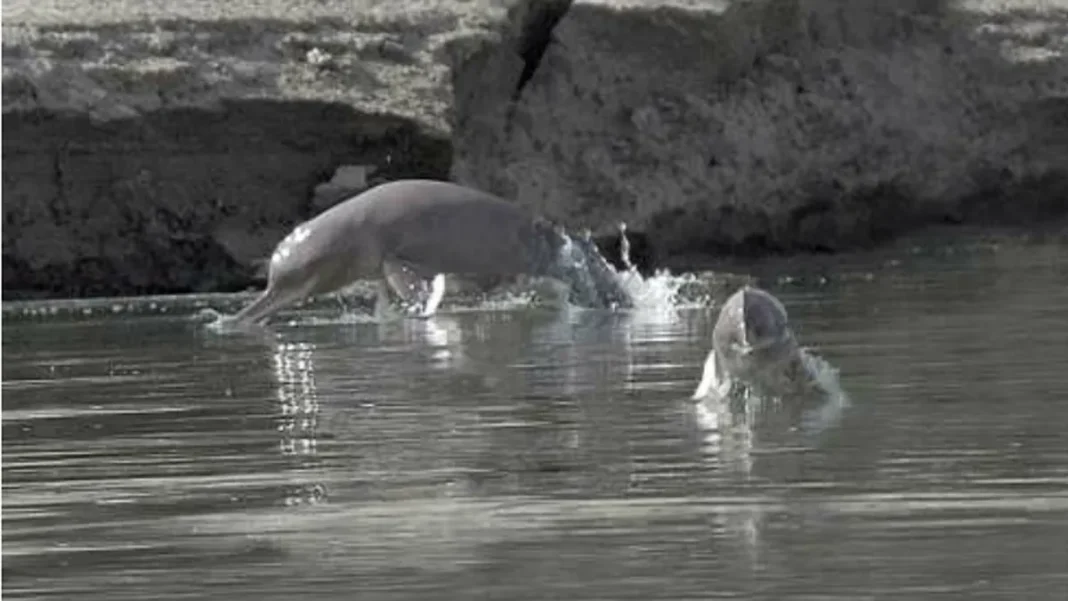
Punjab has opened the new Indus blind dolphin resort at Taunsa Barrage in Kot Addu, where visitors can watch the rare Indus blind dolphin in its natural habitat, Chief Minister Maryam Nawaz Sharif has announced.
The Tourism Development Corporation of Punjab, known as TDCP, has built the Blind Dolphin Resort on 120 kanals along the bank of the River Indus. The chief minister shared the launch in a post on X on November 5.
“Imagine sipping your morning tea while watching the rare blind Indus dolphin leap through the river waves,” she wrote. The resort opens under the provincial government’s Magnificent Punjab tourism drive.
What the Indus blind dolphin resort offers
The resort is an eco-friendly recreational destination built in line with international tourism standards, according to the chief minister. Its facilities include hospitality services, scenic terrace views and dining options.
The site sits on the riverbank at Taunsa Barrage, one of the main barrages on the Indus in southern Punjab. Visitors will be able to look out over the river from the terraces and watch for dolphins surfacing in the stretch below the barrage.
Maryam Nawaz said the resort would give visitors a chance to explore Pakistan’s natural heritage and observe one of the country’s rare aquatic species in its natural environment. She added that the project also supports wildlife conservation.
Why Taunsa matters for the dolphin
The Indus river dolphin, known locally as the bhulan, is one of the world’s most threatened freshwater cetaceans. It lives only in the Indus river system, and the International Union for Conservation of Nature lists it as endangered.
The species is often called the blind dolphin because its tiny eyes have no lens. It finds its way largely by echolocation, using sound to find food and sense its surroundings in the murky river water.
Its range has shrunk by about 80 percent from its historic extent. A series of irrigation barrages built from the late 1800s onwards split the river into sections, and the dolphin now survives in five separate sub-populations between those barrages.
The most recent comprehensive survey, carried out in 2017, sighted 1,816 dolphins across the three largest stretches of the river. The Taunsa to Guddu stretch, where the new resort stands, held an estimated 660 animals, making it one of the three largest sub-populations.
The largest group lives between Guddu and Sukkur barrages, with an estimated 1,139 dolphins. The Chashma to Taunsa stretch holds around 188. The Sindh government declared the Guddu to Sukkur stretch the Indus Dolphin Reserve in 1974, and hunting the dolphin has been banned since around the same time.
A second chance for a rare species
The numbers have improved from the low point of the early 2000s, when surveys counted fewer than 1,000 dolphins in the whole river system. The 2017 count of 1,816 showed a clear recovery, and the counts in each stretch have risen steadily since 2001.
Even so, the species remains at risk. Illegal fishing, water pollution and low river flows all threaten the dolphins, and the barrages that fragment their habitat also stop them from moving freely between stretches.
Tourism that respects the river can help. A resort that brings visitors to watch the dolphins gives the local economy a reason to protect them, and it puts the species in front of people who may never have known it existed.
The test will be how the resort is run. Boat traffic, noise and waste can disturb the animals, so the promise of eco-friendly operations will need to hold in practice. If it does, Taunsa could become a model for wildlife tourism in Punjab.
What visitors should know
Taunsa Barrage sits near Kot Addu in southern Punjab, on the Indus. The resort adds a new stop to the region’s tourism map, alongside the barrage itself and the riverbanks around it.
The best time to look for dolphins is in the early morning, when the water is calm and the animals come up to breathe. The chief minister’s image of morning tea on a terrace captures the experience the resort is selling.
Visitors planning a trip should check the resort’s opening hours and booking details with the TDCP before travelling, as the launch announcement did not set out the full visitor arrangements.
The project adds to Punjab’s push to develop its river and wildlife sites for visitors. Other nature destinations in the province include the Hub Dam wildlife sanctuary and Hingol National Park, while marine life can also be seen at Churna Island off the Karachi coast. The Taunsa area has also been in the news over canal water for farmers.
Frequently asked questions
Where is the new blind dolphin resort?
The TDCP Blind Dolphin Resort stands at Taunsa Barrage in Kot Addu, on 120 kanals along the bank of the River Indus.
What is the Indus blind dolphin?
It is a freshwater dolphin found only in the Indus river system. It is listed as endangered, and it is often called blind because its tiny eyes have no lens. It navigates mainly by echolocation.
How many Indus dolphins are left?
A comprehensive survey in 2017 sighted 1,816 dolphins. The Taunsa to Guddu stretch held an estimated 660 animals, one of the three largest sub-populations.
When was the resort announced?
Chief Minister Maryam Nawaz Sharif announced the resort in a post on X on November 5, 2026.